



If you’re after a slower card game that lets you think before you act, pai gow poker strategies are worth a proper look. The pace suits an arvo session when you want action without the rush, and the bankroll swings tend to be gentler than many table games. We’ll walk through how the hand-setting rules actually work, where the decisions really matter, and how to pick a room that keeps giving you reasons to come back after the welcome bonus fades.
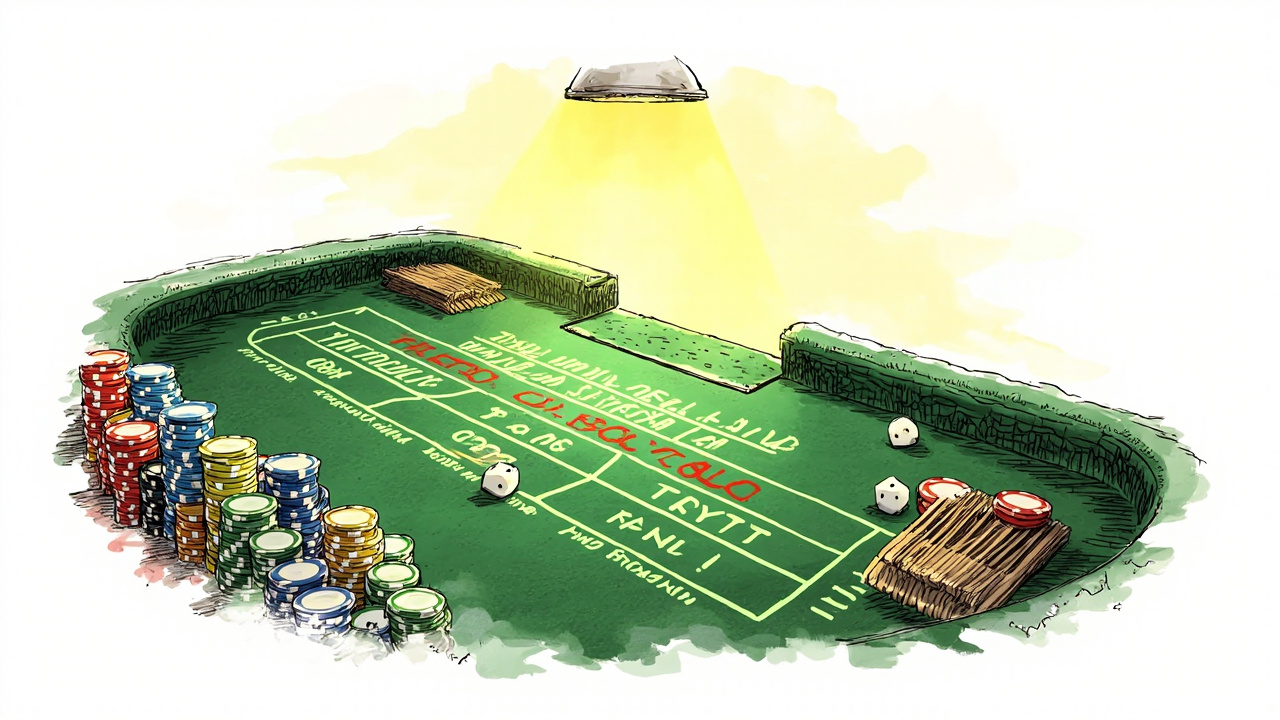
The core of pai gow poker strategies is the dual-hand setup, because every decision you make at the table is really about how you split seven cards into a five-card hand and a two-card hand. You have to keep the five-card hand stronger than the two-card hand, which is called the house way when the dealer sets their own cards, but your own splits are where the real control sits. Most players lose money not because they misread the board, but because they set their hands too aggressively and weaken the low hand, or too passively and let the high hand drift below what the dealer can beat.
A sensible starting point is to treat the two-card hand as the anchor for your whole split. If you’re working with a pair or better in that low hand, you’re usually in a decent spot, because the dealer’s two-card hand is the one that gets beaten most often across a session. When you’re staring down a weak low hand, the temptation is to push cards up into the five-card side and hope for a big win, but that usually just leaves you exposed on both sides at once. The game rewards patience more than it rewards chasing a single strong outcome, which is why the calmer players tend to keep their chips longer.
I’ve spent years building platform content and watching how audiences actually behave once the novelty wears off, and the same pattern shows up here: people who treat the low hand as a fixed priority rather than an afterthought stick around far longer. That’s the kind of measurable engagement I look for when I’m judging whether a game mechanic actually holds attention, and pai gow poker strategies that ignore the two-card hand usually fall apart in practice. If you want a closer look at how that kind of disciplined thinking carries over into other card formats, the piece on advanced poker strategy for smarter online play is worth a read for the broader decision-making habits it covers.
The dealer’s house way is the fixed set of rules they follow when they build their own two hands, and that fixed routine is what makes the game feel more predictable than a lot of other card rooms. You don’t need to memorise every variation on day one, but you do need to understand that the dealer will generally protect the high hand first and then maximise the low hand where the rules allow it. That means your best play is usually to avoid forcing a situation where both your hands are weak, because the dealer’s routine is built to survive exactly that kind of sloppy split.
Bankroll management matters here because the pace is deliberately slow and the swings are smaller per hand, which can trick you into thinking you’re fine to keep pushing. A better approach is to set a session limit in Australian dollars before you sit down, then treat every hand as a small decision rather than a chance to recover a bad beat. When I’m advising on platform engagement, I always look for the behaviour that keeps people returning without blowing through their limits in one rush, and that same discipline applies to a game where the dealer’s fixed rules already tilt the short-term outcomes.
The payment side is just as important as the playing side, because a room that looks good on paper can still be a headache if the withdrawals drag or the currency conversions eat into your session. A solid operator should let you register quickly, show clear bonus mechanics upfront, and handle AUD without making you jump through weird conversion steps every time you want to move money. Mobile play needs to keep the same hand-setting clarity as the desktop version, because squinting at a cramped screen while you’re trying to split seven cards is a fast way to make a careless mistake. Support and loyalty matter too, because the real test of a room is what happens after the first few deposits, not how loud the welcome offer sounds on the landing page.

If you’re ready to spin up a session, a proper uptownpokies login casino should give you a clean registration flow, a loyalty ladder that actually rewards repeat play, and recurring promos that don’t vanish the moment the first bonus is used. Cashback and tournament drops are the kind of ongoing value that keeps a game like this interesting beyond the first week, especially when you’re playing for the slower rhythm rather than chasing a single big win. The best rooms also make it easy to check your activity and see where your play is going, which is the sort of transparency I’d want before I’d call a platform worth returning to.
Pai gow poker strategies suit players who like a measured session and don’t mind a game that moves at its own pace. If you’re the type who wants a table where you can think through each split without being rushed, this is a decent fit, especially if you’re playing in the evening after work and just want something steady rather than a fast-paced sprint. It also suits players who like a bit of control over their outcomes, because the hand-setting decisions are real and they matter across a full session, even if no single hand is going to make or break your night.
The game is less ideal for anyone who wants constant action or big rapid swings, because the dual-hand structure naturally slows things down and spreads the results out. If you’re used to games where every round feels like a fresh adrenaline hit, this one may feel too quiet, and that’s a fair reason to look elsewhere. For Perth locals who want a game they can settle into during a long arvo or a quiet night in, though, the slower rhythm can be a feature rather than a drawback.
A US$39.7 million Megabucks jackpot in 2003 remains one of the largest slot wins in history, won on a $100 bet, which is the kind of outlier story that gets recycled endlessly but doesn’t tell you much about how a card game actually plays hour to hour. By contrast, baccarat tables in high-limit rooms are often large and seat many players, which shows how different games are built for different crowd sizes and different kinds of attention. Pai gow poker sits closer to the patient end of that spectrum, and that’s exactly why the right player-fit matters before you commit any serious time to it.uptownpokies login casino Advanced Poker Strategy for Smarter Online
If you’re comparing the Australian experience with what’s normal overseas, the biggest difference is that the local market is built around clear separation between licensed domestic options and anything offshore, so the smart move is always to treat the room itself as the thing you’re judging, not the promise of a shortcut. In the UK and parts of Europe, the regulated market is more consolidated, and players there tend to expect a tighter standard around bonus terms and ongoing promos as a matter of course. New Zealand sits somewhere nearby in spirit, with a similar caution around offshore play, while the United States is far more fragmented by state and by operator, so the same game can feel very different depending on where you’re logging in. None of that changes the basic hand-setting decisions, but it does change how much weight you should put on the platform behind the game.
The right approach is to treat pai gow poker strategies as a way to stretch a session, not as a way to force a result, and to pick a room that keeps giving you reasons to come back after the first bonus is gone. Recurring promos, cashback, loyalty rewards, and tournament action are the things that actually make a game worth revisiting, and they matter more than any single welcome offer when you’re playing for the long run. Play within your limits, set your hands with the low side in mind, and let the slower pace do the work.
Recent Comments