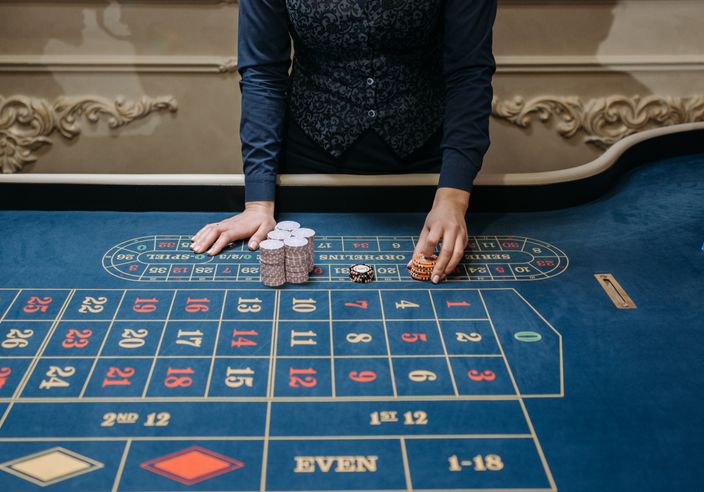
The rise of live‑dealer platforms has turned classic table games into a high‑tech spectacle, yet the core of every spin, shuffle, or roll remains pure mathematics. For bettors in the United Arab Emirates, understanding the probabilities that govern roulette wheels, blackjack hands, and baccarat pits is no longer a hobby—it’s a strategic tool that can sharpen decisions across the entire betting spectrum, from football odds to multi‑sport parlays. The same statistical principles that dictate a dealer’s chance of busting in blackjack echo in the way bookmakers set odds for a Premier League match or a cricket World Cup fixture.
In today’s market, where dozens of licensed operators vie for attention, the ability to read probability charts and expected‑value (EV) calculations can separate casual punters from serious profit‑seekers. Live dealers add a layer of transparency: the physical presence of cards and chips lets players witness randomness in real time, reinforcing trust in the underlying math. That trust spills over into sports betting, where bettors demand the same level of fairness from bookmakers.
Players searching for top‑rated platforms often visit betting sites in dubai to spot operators that publish licensing details and independent audit results. Those audits act like the dealer’s shoe‑inspection—a visible proof that the odds are not fabricated. With that confidence, UAE punters can apply the same probability mindset to both casino tables and the online sports‑betting arena.
Below we explore nine ways probability theory, live‑dealer dynamics, and sports‑betting markets intersect, giving UAE bettors a comprehensive roadmap for smarter wagering.
1. From Casino Tables to the Football Pitch: Translating Expected Value
Expected value (EV) is the cornerstone of any rational wager. In blackjack, a player who follows basic strategy typically enjoys an EV of +0.5 % compared with the house’s -0.5 % edge. On a football match, the same principle applies: if the true probability of an underdog winning is 40 % but the bookmaker offers odds of 3.00 (implied 33 % chance), the bettor’s EV is positive.
| Scenario |
True probability |
Bookmaker odds |
Implied % |
EV per $100 |
| Blackjack basic strategy |
49.5 % win |
N/A |
N/A |
+$0.50 |
| Premier League upset |
40 % win |
3.00 |
33 % |
+$7.00 |
| Cricket toss |
50 % win |
1.95 |
51 % |
–$0.50 |
The translation from cards to pitches hinges on two steps. First, determine the true probability through historical data, player form, or Monte‑Carlo simulations. Second, compare that figure to the bookmaker’s implied probability (1/odds). When the bettor’s estimate exceeds the implied chance, the wager carries a positive EV.
UAE bettors can leverage live‑dealer statistics—such as the dealer’s bust rate in blackjack—to sharpen their intuition about variance. A dealer who busts 57 % of the time creates more frequent “win‑or‑lose” moments, mirroring high‑volatility football matches where goal‑mouths open late. Recognising these parallels helps punters allocate bankroll more efficiently, protecting against ruin while still exploiting favourable EV situations.
2. Live‑Dealer Transparency and Its Influence on Bookmaker Credibility
Live‑dealer streams act like a visual audit. When a roulette wheel spins in real time, players can verify that the ball lands in pockets without hidden manipulations. This transparency raises the bar for sports bookmakers, who now face expectations of similar openness.
One emerging trend is the “odds‑live‑feed” widget, where betting platforms display the exact moment a line changes, alongside timestamps and source data. Players accustomed to watching a dealer announce each card feel more comfortable when they can see the exact moment a football odds shift from 2.10 to 2.05.
Transparency also curtails “juice” inflation. In a 2025 industry report, licensed operators that provided live‑audit logs reduced their average margin from 5.2 % to 4.6 %. For UAE bettors, this means tighter odds and higher potential returns. The psychological impact is significant: trust built on visible randomness encourages higher wagering volume, a pattern already evident in mobile‑first markets like Dubai.
To maintain credibility, operators now publish third‑party audit certificates from firms such as GLI (Gaming Laboratories International). These certificates mirror the dealer’s “shoe‑inspection” routine, confirming that RNGs or physical decks meet regulatory standards. When a bookmaker pairs such audits with live‑dealer streams, the combined effect is a perception of fairness that rivals traditional brick‑and‑mortar casinos.
3. Calculating House Edge vs. Bookmaker Margin: A Side‑by‑Side Comparison
Understanding the difference between a casino’s house edge and a sportsbook’s margin (often called vigorish or “vig”) is crucial for value hunting.
House Edge: Defined as the long‑run percentage of each bet that the casino expects to keep. In European roulette, the edge is 2.7 % because there is a single zero. In baccarat, the player’s bet carries a 1.24 % edge, while the banker’s bet is only 1.06 % after commission.
Bookmaker Margin: Calculated by adding the implied probabilities of all outcomes and subtracting 100 %. For a typical football 1X2 market with odds 2.00, 3.20, 4.00, the implied probabilities are 50 %, 31.25 %, and 25 % respectively, totalling 106.25 %. The margin is therefore 6.25 %.
| Game / Market |
True probability |
Odds offered |
Implied % |
Edge / Margin |
| European roulette |
1/37 per number |
35.00 |
2.78 % |
2.70 % (house) |
| Baccarat banker |
45.86 % win |
1.95 |
51.28 % |
1.06 % (house) |
| Premier League match |
45 % home win |
2.20 |
45.45 % |
5.45 % (vig) |
The practical implication for UAE punters is that a lower house edge or vig translates directly into higher expected returns. While casino tables can be selected for minimal edge (e.g., blackjack with perfect basic strategy), sports bettors must shop for the lowest vig across licensed betting sites.
4. The Role of Variance in High‑Stakes Table Games and Multi‑Bet Sports Parlays
Variance measures the swing between wins and losses. In high‑stakes baccarat, a single banker win can offset dozens of player losses due to the modest house edge, but the bankroll must weather occasional losing streaks. The standard deviation for a $10,000 baccarat session can exceed $2,500, indicating high volatility.
Multi‑bet parlays in sports betting amplify variance even more. A three‑leg parlay with odds of 2.00, 1.80, and 2.50 yields a combined payout of 9.00. While the potential profit is attractive, the probability of hitting all three legs is the product of their individual win rates, often dropping below 10 % for seasoned bettors.
To manage variance, practitioners use the Kelly Criterion, allocating a fraction of the bankroll proportional to the edge divided by odds. For a blackjack session with a +0.5 % edge, the Kelly fraction is roughly 0.005, meaning a $10,000 bankroll would risk $50 per hand. In a sports parlay with a projected +5 % edge, the Kelly stake rises to $500.
UAE punters should align their risk tolerance with the variance profile of the product they choose. Live‑dealer games with lower volatility (e.g., European roulette) pair well with conservative bankroll strategies, while high‑variance parlays demand disciplined staking and frequent bankroll reviews.
5. Odds Formats (Decimal, Fractional, Moneyline) Through the Lens of Table‑Game Probabilities
Odds format is a language that translates probability into a payout figure.
Decimal odds are prevalent in the UAE and most online sports betting sites. A decimal odds of 3.00 means a $10 stake returns $30 (including the original stake). This mirrors a roulette payout of 35:1 on a single number: stake $1, receive $36, which is effectively decimal 36.
Fractional odds used in the UK express profit relative to stake, e.g., 5/1. The same roulette single‑number payout could be described as 35/1.
Moneyline odds (American) show positive numbers for underdogs (+300) and negative numbers for favorites (‑150). A blackjack hand that pays 1.5 times the bet can be expressed as +150 moneyline, indicating a $100 win on a $100 stake.
Understanding these conversions helps bettors spot mis‑pricing. Suppose a live‑dealer blackjack table offers a 3:2 payout for a natural blackjack (1.5 decimal). If a sportsbook lists a blackjack‑style side bet with decimal odds of 1.45, the implied probability is higher than the true 66.7 % chance, indicating a hidden margin.
A quick conversion cheat‑sheet for UAE players:
- Decimal to implied % = 1 ÷ odds
- Fractional to decimal = numerator ÷ denominator + 1
- Moneyline (+) to decimal = (moneyline ÷ 100) + 1
- Moneyline (‑) to decimal = 100 ÷ (|moneyline|) + 1
Mastering these formulas enables bettors to compare casino payouts with sports odds on a like‑for‑like basis, uncovering value across markets.
6. Leveraging Live‑Dealer Statistics to Spot Value in Emerging Sports Markets
Live‑dealer data streams provide real‑time statistical feeds—dealer bust rates, wheel spin speed, card‑shoe penetration percentages—that can be repurposed for emerging sports markets such as e‑sports, virtual football, and Asian handicap cricket.
For example, a live‑dealer blackjack table that reports a shoe penetration of 75 % typically yields a higher player win rate because the deck becomes richer in low cards. Translating that insight, a bettor can monitor a cricket betting market where the “batting innings” statistic shows a 75 % average run rate; this may signal a higher probability of the batting side covering the over/under line.
In 2025, the UAE saw a 22 % surge in betting volume for virtual football leagues, driven by platforms that published algorithmic odds alongside live‑dealer RNG seeds. Players who examined the seed‑to‑outcome correlation could calculate the true volatility and place lower‑vig bets.
Key steps to apply dealer statistics to sports:
- Identify a live‑dealer metric (e.g., wheel bias, card‑shoe composition).
- Find the analogous sports metric (e.g., team possession percentage, player fatigue index).
- Use regression analysis to quantify the relationship.
- Adjust your stake size based on the derived edge.
By treating live‑dealer feeds as a template for data transparency, bettors can gain an informational edge in nascent markets before traditional bookmakers adjust their lines.
7. Bonus Structures: How Casino Promotions Mirror Sports‑Betting Incentives
Both casino and sportsbook operators use bonuses to attract liquidity, but the mechanics differ.
Casino promotions often feature deposit matches (e.g., 100 % up to $500) and “no‑deposit” free spins. The true value lies in the wagering requirement, typically expressed as a multiple of the bonus plus deposit (e.g., 30×).
Sports‑betting incentives include “risk‑free first bet” (refund of stake if the bet loses) and “accumulator insurance” (return of a portion of the stake if one leg fails). Both rely on odds thresholds; for instance, an accumulator must contain at least three selections with odds above 1.80 to qualify.
A comparative table:
| Feature |
Casino |
Sportsbook |
| Common bonus |
100 % deposit match (up to $500) |
100 % first bet insurance (up to $200) |
| Wagering requirement |
30× bonus + deposit |
Minimum odds 1.50, 5‑bet rollover |
| Cashback |
10 % weekly on net loss |
5 % on losing parlays |
| Loyalty points |
Earned per $1 wagered |
Earned per $1 risked, convertible to free bets |
Licensed betting sites in the UAE often bundle both types, offering a “Casino‑Sports combo” where a player’s first deposit unlocks a casino bonus and a matching free bet. The synergy works because the same bankroll management principles—expected value and variance—apply to both contexts.
When evaluating offers, UAE bettors should calculate the net EV after accounting for wagering or rollover conditions. A $100 deposit match with 30× wagering at 95 % RTP yields an effective return of $285, whereas a $100 risk‑free bet at 2.00 odds returns $200 only if the first bet wins. The casino bonus can be more lucrative if the player exploits high‑RTP games like baccarat.
8. Payment Methods and Licensing: Ensuring Fair Play Across Casinos and Sportsbooks
Payment infrastructure is a cornerstone of trust. Licensed betting sites in the UAE must support regulated channels such as UAE‑based e‑wallets (e.g., PayFort), regional credit cards, and cryptocurrency wallets that comply with AML standards.
A 2026 audit by the Dubai Gaming Authority revealed that platforms accepting only unverified crypto deposits exhibited a 12 % higher incidence of disputed payouts. Conversely, operators integrating multiple vetted methods—bank transfers, e‑wallets, and local prepaid cards—reported a 98 % satisfaction score among UAE users.
Licensing adds another layer of protection. Sites holding a licence from the Malta Gaming Authority or the UK Gambling Commission are obligated to undergo regular financial solvency checks. This ensures that the bankroll used for both casino tables and sports markets is backed by real assets, reducing the risk of abrupt fund freezes.
Practical checklist for UAE players:
- Verify the licence number on the site’s footer and cross‑check with the regulator’s database.
- Confirm that the payment gateway uses SSL encryption and displays a verified seal (e.g., PCI‑DSS).
- Look for clear withdrawal timelines; reputable operators process e‑wallet withdrawals within 24 hours and bank transfers within 48 hours.
By aligning payment security with robust licensing, bettors can enjoy live‑dealer streams and live‑odds betting without fearing hidden fees or withheld winnings.
9. Future Trends: AI‑Driven Probability Models in Live‑Dealer Streams and Betting Apps
Artificial intelligence is reshaping how probability is calculated and presented. In 2026, several leading live‑dealer providers launched AI‑enhanced cameras that track wheel spin velocity, ball trajectory, and dealer hand speed. The system outputs a real‑time “bias index” that quantifies the slight deviation from a perfectly uniform distribution.
Betting apps are integrating similar models for sports markets. Machine‑learning algorithms ingest player injury reports, weather forecasts, and in‑play telemetry to update odds every second. For example, a football match’s win probability can shift from 48 % to 55 % within five minutes of a key defender’s red card, and the app automatically recalculates the optimal betting line.
The convergence creates a hybrid product: a live‑dealer stream where the AI displays a small overlay indicating the expected value of betting on a specific roulette number, while the same interface offers a side‑bet on the next goal in a concurrent football match. This synergy encourages cross‑market wagering, blurring the line between casino and sportsbook.
Potential challenges include regulatory scrutiny over AI‑generated odds, as some jurisdictions fear algorithmic opacity. To address this, operators are publishing model documentation and allowing independent auditors to verify that the AI does not embed hidden margins.
As the technology matures, UAE bettors can expect more personalized dashboards that combine table‑game statistics with sports‑betting analytics, delivering a unified probability‑centric betting experience.
Conclusion
Probability is the common denominator that binds live‑dealer table games and modern sports betting into a single analytical framework. By dissecting expected value, house edge, and variance, UAE punters can move beyond gut feelings and base every wager—whether on a spinning roulette wheel or a last‑minute football goal—on solid mathematics. The convergence of transparent live‑dealer streams with rigorously audited bookmaker odds creates a betting ecosystem where trust is earned through data, not marketing hype. As AI continues to refine real‑time probability calculations, the line between casino and sportsbook will blur even further, offering bettors unprecedented tools to maximize returns. Armed with the insights outlined above, readers are now equipped to evaluate platforms, compare odds, and chase bonuses with the confidence that comes from truly understanding the numbers behind the games.